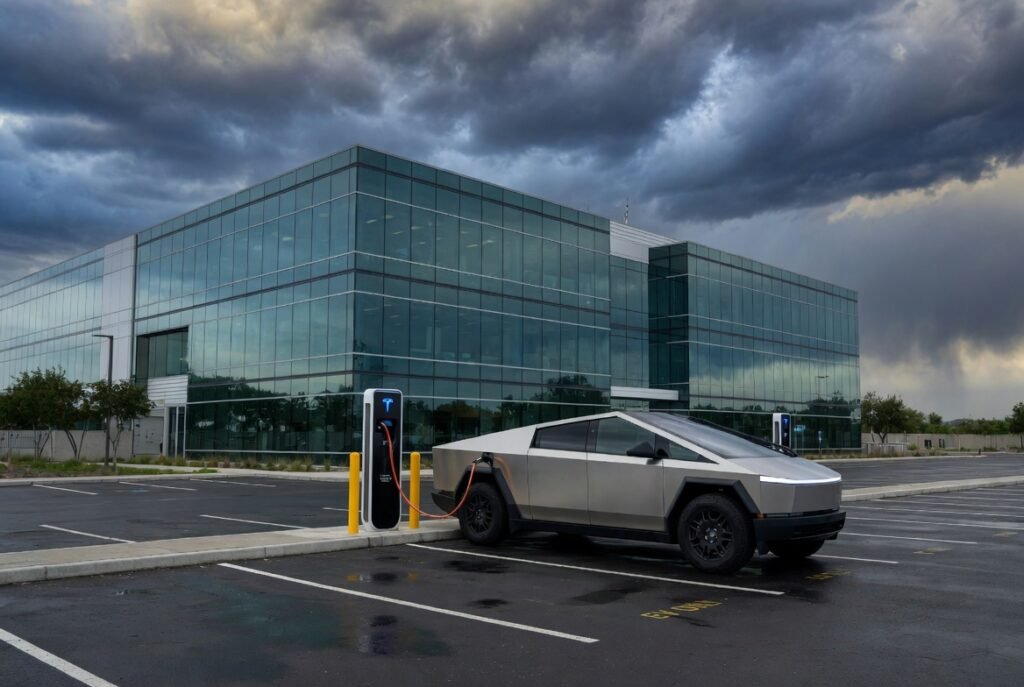
When data dropped showing SpaceX snapped up 18% of all Tesla Cybertrucks sold in the United States during Q4 2025, even seasoned EV watchers did a double take. One company, founded by the same person who runs Tesla, quietly became the single largest fleet buyer of the controversial stainless-steel pickup. The move isn’t just interesting. It’s a signal about where serious industrial users see the future of work trucks heading.
The Scale of the Purchase
We’re not talking about a handful of demo vehicles. SpaceX purchased nearly one in five Cybertrucks delivered in the United States that quarter. For a company known for squeezing every ounce of performance and reliability out of its hardware, this represents a serious endorsement. These aren’t being bought for marketing photos. They’re heading straight into operational use at Starbase and other facilities where extreme durability, electric efficiency, and rapid deployment matter.
Why Cybertrucks Make Strange Sense for SpaceX
Look past the cyberpunk styling and you’ll see a vehicle built from the same philosophy that governs SpaceX’s rockets: radical simplicity, high strength-to-weight ratios, and fewer moving parts. The Cybertruck’s exoskeleton isn’t a gimmick when you’re operating in environments filled with flying debris, harsh chemicals, and tight timelines. Its 48-volt architecture aligns perfectly with the electrical systems SpaceX already uses across its facilities. The stainless steel body laughs at corrosion. The structural battery pack offers both protection and energy storage in one package.
Elon Musk has repeatedly said the Cybertruck was designed as a “cybernetic organism” – part vehicle, part mobile power station. For a company that regularly needs to move heavy equipment, provide mobile power for tools, and operate in remote locations, that combination becomes compelling.
Fleet Strategy Meets Environmental Reality
SpaceX isn’t buying these trucks to virtue signal about being green. They’re doing it because electric drivetrains deliver superior torque, lower maintenance costs, and predictable operating expenses compared to traditional pickups. When you’re running a fleet at scale, those factors compound quickly. The environmental benefits come as a welcome side effect rather than the primary driver.
This purchase also reveals something deeper about how forward-thinking companies now evaluate transportation assets. The Cybertruck’s software-updatable nature means its capabilities can improve over time rather than degrade – a trait that perfectly matches SpaceX’s iterative engineering culture.
What This Means for the Wider EV Market
When the world’s most demanding technology company starts deploying an EV at this scale, it sends a message to every fleet manager watching from the sidelines. Doubts about range, durability, payload capacity, and total cost of ownership get harder to justify when SpaceX is voting with its checkbook.
The move also highlights an emerging truth in the electric vehicle transition: the most powerful adoption signals often come from industrial users rather than consumer marketing campaigns. While many still debate the Cybertruck’s looks, serious operators are discovering its functional advantages.
The bigger picture emerging is that vertical integration between Tesla and SpaceX isn’t just about shared leadership. It’s about shared engineering DNA creating vehicles that solve real problems in extreme environments. The Cybertruck was always intended as more than a consumer truck. SpaceX just proved it.
This single data point from Q4 2025 might be remembered as the moment electric work vehicles moved from experimental to inevitable. The conversation has officially shifted from “if” to “how fast.”
Other EV Articles
- The EV Market is Splitting in Two – And That’s Actually Great News
- Why the Trump-Xi Summit Just Made Chinese EV Market Access a Much Bigger Problem
- QuantumScape’s $11M Q1 Billings: Why the Eagle Battery Just Changed the Game

- Toyota’s bZ4X Just Took the EV Crown – What It Really Means for the Future
- Uber’s $1.25 Billion Bet on Rivian Just Changed the Robotaxi Race
- Tesla’s Cybercab Production Just Started — And It Changes Everything
- Mitsubishi and Škoda Just Dropped Two Very Different EV Bombshells for 2026
- Kia’s Bold EV3 Gamble: Why This Compact SUV Could Redefine Affordable Electric Driving
- Lexus Just Dropped a Three-Row Electric SUV That Feels Like a Private Jet on Wheels
- Tesla’s Spring 2026 Update Just Changed the Game: Hey Grok and Smarter FSD Are Here
- Sony Honda Afeela 1: Why This Premium EV Could Redefine What “Luxury” Means in 2026
- Jeep’s 2026 Recon EV: The Wrangler’s Electric Twin That Might Actually Deliver Off-Road Fun
- Hino’s New LE Series Electric Truck Just Changed the Medium-Duty Game
- Why Polestar’s OEM Telematics Just Got a Whole Lot Smarter with Geotab

- BYD Just Overtook Tesla as the UK’s Top EV Brand – What This Really Means

Leave a Reply