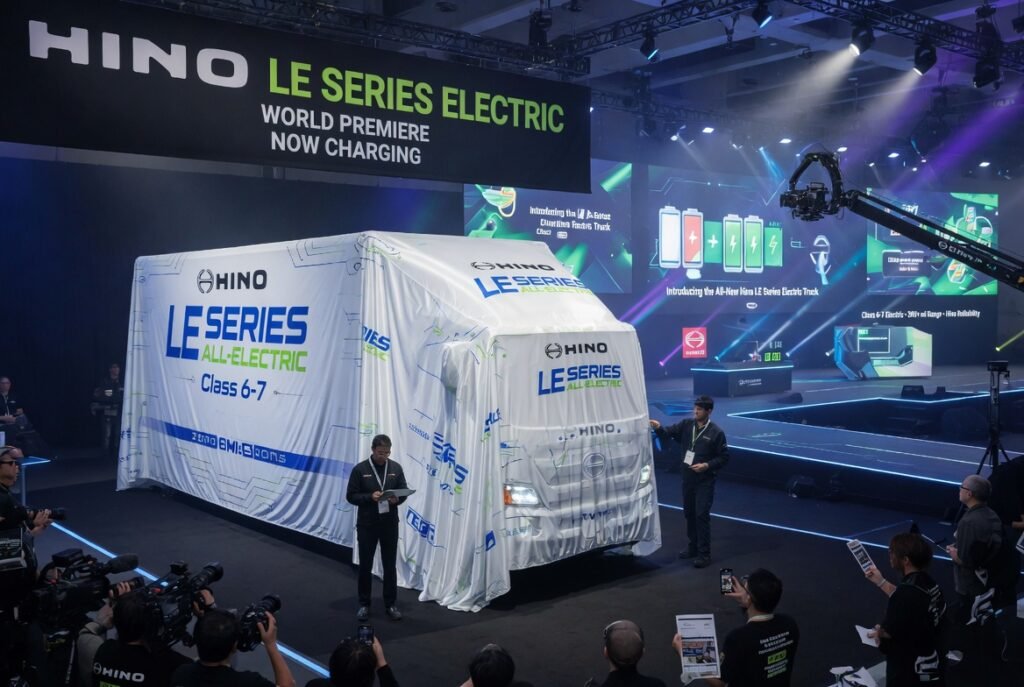
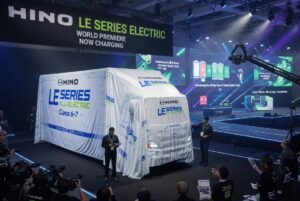
The EV industry loves talking about flashy long-haul semis and billion-dollar battery bets. Yet the real revolution is happening in the trucks that actually deliver your packages, haul your waste, and keep cities running every single day. Hino just dropped the LE Series, a purpose-built battery-electric medium-duty truck that proves you don’t need hype when you have real-world smarts.
This isn’t another concept vehicle with unrealistic range claims. The Hino LE Series is a Class 6-7 electric truck engineered from the ground up for urban and regional routes. With its low-entry cab design, smooth electric torque delivery, and thoughtful placement of battery packs, it feels like the truck drivers actually want to operate rather than one engineers forced on them.
What makes this launch particularly interesting is Hino’s refusal to play the usual range anxiety game. Instead of promising 400 miles that almost nobody needs in this segment, the LE Series focuses on what medium-duty operators actually do: repeated stop-start routes, tight city maneuvering, and predictable daily distances. That pragmatic approach delivers meaningful efficiency gains and lower total cost of ownership without forcing customers into unrealistic expectations.
The timing is also telling. While many legacy manufacturers are still hedging their electric bets, Hino is leaning in with a truck designed specifically for the routes where electrification makes the most financial and environmental sense right now. Fleet operators watching their diesel maintenance bills and emissions compliance costs will find the math increasingly difficult to ignore.
Why Medium-Duty Electrification Matters More Than You Think
Here’s the contrarian truth most EV coverage misses: medium-duty trucks represent one of the highest-impact opportunities for fleet electrification. They return to the same depot every night, operate on relatively consistent routes, and create concentrated pollution in populated areas. Solve medium-duty and you solve a surprising chunk of both carbon emissions and local air quality problems at once.
Hino clearly understands this. The LE Series pairs familiar chassis reliability with next-generation electric architecture that feels deliberately overbuilt for real-world punishment. Drivers get instant torque, dramatically reduced noise and vibration, and a commanding view of the road that makes those tight delivery maneuvers less stressful.
For environmentally conscious fleet managers who still answer to CFOs, this truck offers something rare: genuine conviction without recklessness. The total cost of ownership calculations start looking attractive even before you factor in rising diesel prices, potential low-emission zone restrictions, or corporate sustainability targets that increasingly carry real financial weight.
The Quiet Shift Happening in Fleet Yards
Watch what happens in the next 24 months. While everyone argues about solid-state batteries and million-mile trucks, operators will quietly begin replacing their aging diesel medium-duty vehicles with trucks like the Hino LE Series. The change will be less visible than a shiny new robotaxi, but far more consequential for actual emissions reduction and infrastructure demand.
This is exactly how meaningful decarbonization happens: not through grand announcements, but through practical vehicles that solve real operational problems better than the status quo. Hino’s new electric truck doesn’t try to be everything to everyone. It simply aims to be the most sensible electric choice for the jobs most medium-duty trucks actually perform.
And in an industry drowning in hype, that kind of focused clarity feels refreshingly radical.
The message to fleet operators is simple. The future isn’t waiting for perfect battery tech. It’s arriving right now in trucks designed for the work you already do.
Other EV Articles
- The EV Market is Splitting in Two – And That’s Actually Great News
- Why the Trump-Xi Summit Just Made Chinese EV Market Access a Much Bigger Problem
- QuantumScape’s $11M Q1 Billings: Why the Eagle Battery Just Changed the Game

- Toyota’s bZ4X Just Took the EV Crown – What It Really Means for the Future
- Uber’s $1.25 Billion Bet on Rivian Just Changed the Robotaxi Race

- Tesla’s Cybercab Production Just Started — And It Changes Everything
- Mitsubishi and Škoda Just Dropped Two Very Different EV Bombshells for 2026
- Kia’s Bold EV3 Gamble: Why This Compact SUV Could Redefine Affordable Electric Driving
- Lexus Just Dropped a Three-Row Electric SUV That Feels Like a Private Jet on Wheels
- Tesla’s Spring 2026 Update Just Changed the Game: Hey Grok and Smarter FSD Are Here
- Sony Honda Afeela 1: Why This Premium EV Could Redefine What “Luxury” Means in 2026
- Jeep’s 2026 Recon EV: The Wrangler’s Electric Twin That Might Actually Deliver Off-Road Fun
- Hino’s New LE Series Electric Truck Just Changed the Medium-Duty Game
- Why Polestar’s OEM Telematics Just Got a Whole Lot Smarter with Geotab

- BYD Just Overtook Tesla as the UK’s Top EV Brand – What This Really Means


Leave a Reply