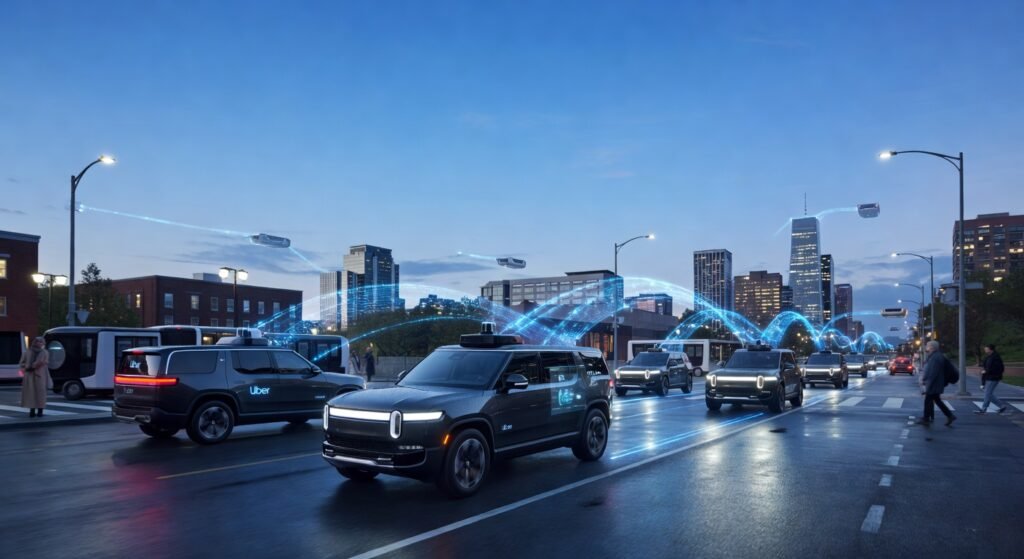
The autonomous future isn’t coming quietly anymore. With one decisive move, Uber has thrown serious weight behind Rivian, committing $1.25 billion to accelerate the development of a dedicated robotaxi fleet. This isn’t just another funding round. It’s a signal that the battle for urban mobility is shifting from hype to heavy industrial reality.
For years, robotaxi developments have lived mostly in PowerPoint decks and carefully staged demo videos. Now the conversation has moved to factory floors, charging infrastructure, and actual vehicle deployment timelines. Uber’s investment gives Rivian the capital to scale production of purpose-built electric vans designed from the ground up for driverless operation. The timing feels deliberate. While some competitors are still wrestling with regulatory hurdles and edge-case safety issues, this partnership aims to combine Uber’s massive ride-hailing network with Rivian’s proven electric vehicle engineering.
Why This Deal Feels Different
Most robotaxi announcements have focused on flashy consumer vehicles. Rivian’s approach appears more pragmatic. By building commercial-grade platforms optimized for high utilization, frequent cleaning, and rapid charging, the company is thinking like a fleet operator rather than a luxury carmaker. Uber clearly sees the same logic. Owning a stake in the hardware maker changes the economics of autonomy from pure software licensing to integrated ownership of both the network and the vehicles.
This move also carries environmental weight. Rivian’s all-electric architecture aligns with growing pressure for zero-emission transport. At a time when cities are tightening emissions rules and consumers are demanding cleaner options, a large-scale electric robotaxi fleet could deliver both fiscal responsibility and genuine sustainability. The financial upside is equally compelling: higher vehicle utilization means better returns on expensive autonomous hardware.
The Strategic Chess Move
Uber isn’t simply buying vehicles. By investing directly in Rivian, the company gains influence over design decisions, production priority, and future innovation roadmaps. In an industry where supply chain bottlenecks can kill momentum, this vertical integration offers a meaningful advantage. It also sends a message to the rest of the autonomous vehicle sector: the winners will likely be those who control both the software experience and the physical fleet at scale.
What makes this especially interesting is Rivian’s track record of delivering rugged, intelligent electric vehicles on relatively aggressive timelines. Their existing platforms already demonstrate sophisticated software integration and durable design. Adapting that DNA for 24/7 commercial robotaxi duty feels like a natural evolution rather than a moonshot.
What This Means for the Future of Cities
If successful, this partnership could accelerate the timeline for widespread robotaxi adoption. Lower operating costs through autonomy combined with electric efficiency could make on-demand transport cheaper and cleaner than car ownership for millions of people. That shift carries enormous implications for urban planning, parking infrastructure, and even personal car buying decisions.
Yet questions remain. Regulatory approval for fully driverless fleets still varies wildly by region. Public trust in autonomous technology continues to fluctuate with every headline-making incident. The companies that navigate both the technical and societal challenges will ultimately claim the biggest share of this multi-trillion-dollar opportunity.
The robotaxi race just got significantly more serious. Uber’s bold investment in Rivian suggests they’re no longer content to wait for perfect technology. They’re betting that the right partnership, the right vehicle architecture, and the right scale can bring the autonomous future forward faster than many expected.
The coming years will reveal whether this $1.25 billion bet was visionary or premature. One thing feels certain: the age of experimental robotaxi pilots is ending. The age of serious, large-scale electric autonomous fleets is beginning.
Other EV Articles
- The EV Market is Splitting in Two – And That’s Actually Great News
- Why the Trump-Xi Summit Just Made Chinese EV Market Access a Much Bigger Problem
- QuantumScape’s $11M Q1 Billings: Why the Eagle Battery Just Changed the Game

- Toyota’s bZ4X Just Took the EV Crown – What It Really Means for the Future
- Uber’s $1.25 Billion Bet on Rivian Just Changed the Robotaxi Race
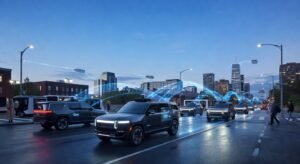
- Tesla’s Cybercab Production Just Started — And It Changes Everything
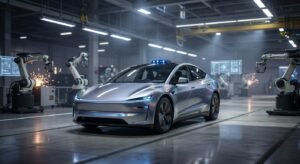
- Mitsubishi and Škoda Just Dropped Two Very Different EV Bombshells for 2026
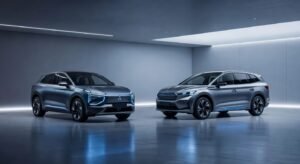
- Kia’s Bold EV3 Gamble: Why This Compact SUV Could Redefine Affordable Electric Driving
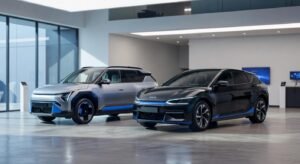
- Lexus Just Dropped a Three-Row Electric SUV That Feels Like a Private Jet on Wheels
- Tesla’s Spring 2026 Update Just Changed the Game: Hey Grok and Smarter FSD Are Here
- Sony Honda Afeela 1: Why This Premium EV Could Redefine What “Luxury” Means in 2026
- Jeep’s 2026 Recon EV: The Wrangler’s Electric Twin That Might Actually Deliver Off-Road Fun
- Hino’s New LE Series Electric Truck Just Changed the Medium-Duty Game
- Why Polestar’s OEM Telematics Just Got a Whole Lot Smarter with Geotab

- BYD Just Overtook Tesla as the UK’s Top EV Brand – What This Really Means


Leave a Reply