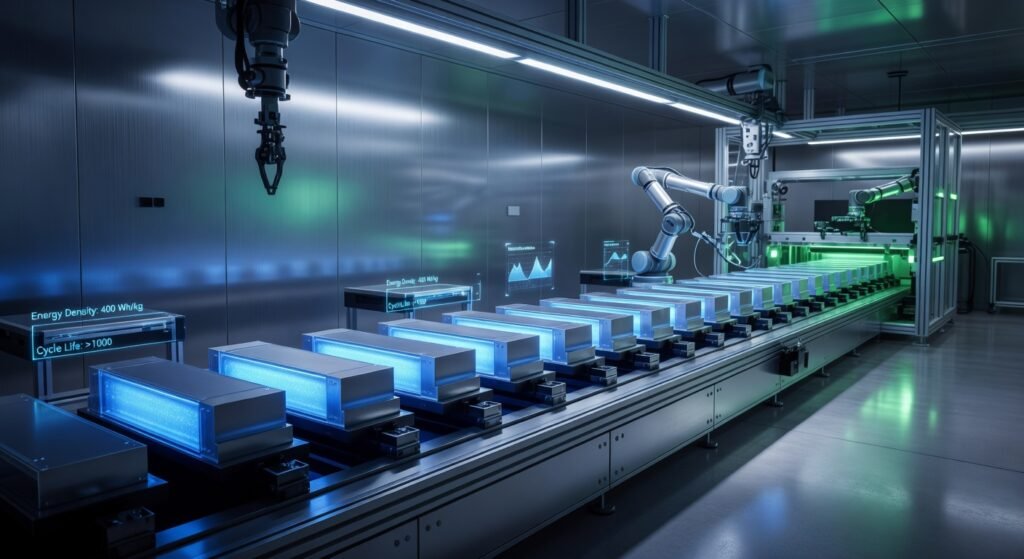
The electric vehicle revolution has been waiting for a hero. This quarter, QuantumScape may have just introduced one.
The company quietly reported $11 million in customer billings for its Eagle line battery in Q1. On the surface, that number looks like another quarterly update. Dig deeper, and it signals something far more important: solid-state battery technology is no longer a laboratory dream. It’s entering real-world validation faster than most analysts predicted.
From Promise to Purchase Orders
For years, the battery conversation has centered on range anxiety, charging speed, and fire risk. QuantumScape’s Eagle platform directly attacks all three. Early data shared with automotive partners shows the cells delivering meaningful improvements in energy density while maintaining the safety profile that only solid-state chemistry can offer.
When a major automaker starts writing checks for prototype lines and test cells, it’s not marketing fluff. It’s engineering teams betting their future platforms on this technology. The $11 million figure represents tangible progress toward commercial-scale adoption, not just another research grant.
What Makes Eagle Different
Traditional lithium-ion batteries have hit a performance wall. Incremental chemistry tweaks deliver smaller and smaller gains while costs remain stubbornly high. QuantumScape’s approach replaces the flammable liquid electrolyte with a solid ceramic separator. The result is a cell that can charge incredibly fast, operate safely at higher voltages, and potentially last longer through thousands of cycles.
This matters because every percentage point of efficiency gained in the battery pack flows straight to the bottom line for automakers and drivers alike. Longer range, smaller pack size, reduced cooling requirements, and dramatically improved safety all become possible when the fundamental chemistry changes.
The Environmental and Economic Reality
Here’s where the story gets interesting for those who care about both the planet and profitability. A better battery doesn’t just reduce emissions. It reduces the total material needed per vehicle, lowers lifetime energy consumption, and creates new possibilities for recycling and second-life applications.
Fiscal responsibility and environmental stewardship aren’t opposing forces when battery technology improves this dramatically. They become aligned. The companies that master this transition will dominate the next decade of transportation, while those clinging to outdated chemistry will struggle to compete.
Why This Quarter Matters More Than Most
The $11 million in billings isn’t the headline. The real story is what it represents: customer validation at a critical moment. While many battery startups continue burning cash on PowerPoint presentations, QuantumScape is shipping hardware and collecting revenue from sophisticated automotive customers who have spent years evaluating every alternative.
This progress comes at a time when global automakers face increasing pressure to deliver compelling electric vehicles that consumers actually want to buy without massive subsidies. The timing couldn’t be better.
The Road Ahead
Nobody is suggesting QuantumScape has solved every challenge. Scaling solid-state manufacturing remains difficult. Cost reduction targets are aggressive. Competition from both traditional lithium-ion improvements and other solid-state players is intense.
Yet the $11 million milestone suggests the company has cleared several crucial technical and commercial hurdles. For an industry that moves at glacial speed, this represents meaningful acceleration.
The battery technology revolution isn’t coming. In many ways, with announcements like this, it’s already here. The only question left is which companies will successfully ride this wave and which will watch from the shore.
Smart observers aren’t just watching the headline numbers anymore. They’re tracking the quiet signals that real commercial traction is building. QuantumScape’s latest update just sent one of those signals loud and clear.
Other EV Articles
- The EV Market is Splitting in Two – And That’s Actually Great News

- Why the Trump-Xi Summit Just Made Chinese EV Market Access a Much Bigger Problem

- QuantumScape’s $11M Q1 Billings: Why the Eagle Battery Just Changed the Game

- Toyota’s bZ4X Just Took the EV Crown – What It Really Means for the Future
- Uber’s $1.25 Billion Bet on Rivian Just Changed the Robotaxi Race

- Tesla’s Cybercab Production Just Started — And It Changes Everything
- Mitsubishi and Škoda Just Dropped Two Very Different EV Bombshells for 2026
- Kia’s Bold EV3 Gamble: Why This Compact SUV Could Redefine Affordable Electric Driving
- Lexus Just Dropped a Three-Row Electric SUV That Feels Like a Private Jet on Wheels
- Tesla’s Spring 2026 Update Just Changed the Game: Hey Grok and Smarter FSD Are Here
- Sony Honda Afeela 1: Why This Premium EV Could Redefine What “Luxury” Means in 2026
- Jeep’s 2026 Recon EV: The Wrangler’s Electric Twin That Might Actually Deliver Off-Road Fun

- Hino’s New LE Series Electric Truck Just Changed the Medium-Duty Game
- Why Polestar’s OEM Telematics Just Got a Whole Lot Smarter with Geotab

- BYD Just Overtook Tesla as the UK’s Top EV Brand – What This Really Means


Leave a Reply