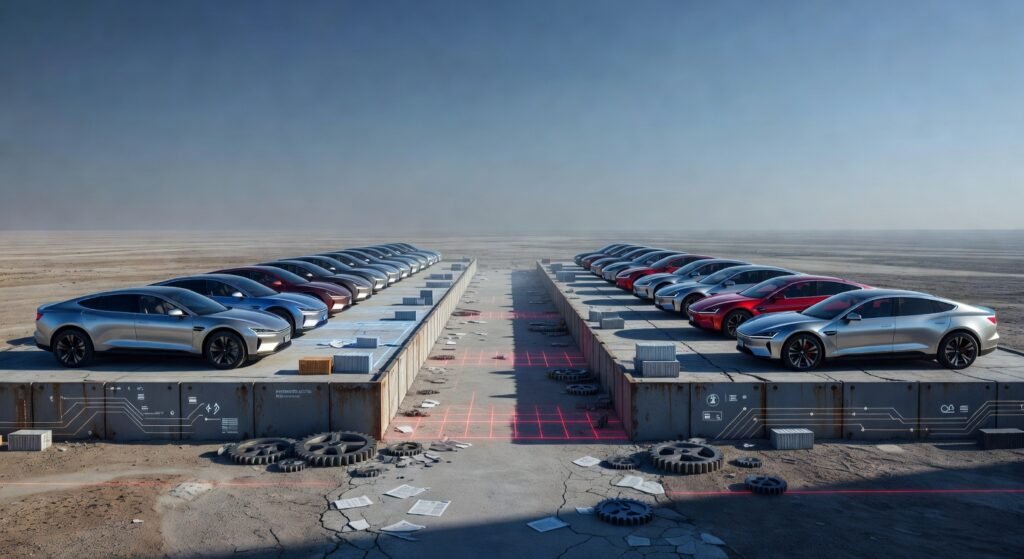
The recent Trump-Xi summit has thrown a fresh spotlight on one of the most contentious issues in global trade: Chinese electric vehicles. While the world races toward an EV future, American policymakers are growing increasingly uneasy about how open—or closed—the Chinese market truly is for foreign players. What looks like a simple diplomatic handshake is actually revealing deep cracks in the EV policy landscape.
The Uneven Playing Field Nobody Wants to Talk About
China has masterfully used its EV policy to dominate the supply chain while keeping foreign competition at bay. Domestic manufacturers enjoy massive subsidies, preferential treatment in licensing, and lightning-fast regulatory approvals. Foreign companies, even those building factories in China, often face joint-venture requirements, technology transfer pressure, and a maze of local rules that feel designed to slow them down.
This isn’t conspiracy—it’s strategy. Beijing wants Chinese brands to own the EV revolution at home before they flood the rest of the world. The Trump-Xi discussions reportedly highlighted exactly this tension, with U.S. officials expressing frustration that American EV makers still struggle for meaningful access despite years of promises.
What the Summit Really Revealed
The meeting underscored a growing realization in Washington: the old rules of engagement no longer work. Chinese EV exports are surging globally, yet the world’s largest EV market remains stubbornly difficult for outsiders to penetrate at scale. This imbalance isn’t just about profits—it’s about technological leadership, jobs, and who controls the future of transportation.
Interestingly, this concern cuts across traditional party lines. Environmentally conscious leaders want the clean transition to succeed, while fiscally responsible voices worry about subsidizing China’s industrial ambitions with American dollars. The summit brought both perspectives into sharper focus.
The Real Cost of Restricted Access
When Chinese companies can sell freely in Europe and Latin America but Western firms face invisible barriers in Shanghai and Beijing, the playing field tilts dramatically. It allows China to achieve economies of scale at home that translate into unbeatable pricing power abroad. This cycle strengthens their battery technology, supply chains, and manufacturing expertise while competitors play catch-up.
Smart observers have long warned that EV policy isn’t just environmental policy—it’s also industrial policy with national security implications. The Trump-Xi summit made that truth impossible to ignore.
Time for Smarter, Not Softer, Strategy
The solution isn’t isolation or blanket tariffs that punish consumers. What’s needed is clear-eyed reciprocity. If Chinese EVs can compete in Detroit showrooms, American and European makers should enjoy equivalent opportunities in Guangzhou and Shenzhen. This principle feels refreshingly straightforward in a world of complicated climate politics.
Policymakers on both sides of the Atlantic are now quietly studying how to build resilient EV supply chains that don’t depend on one dominant player. The summit may have been tense, but it forced an honest conversation that’s been overdue for years.
The EV revolution is too important to let it become a one-way street. As consumers who care about both clean technology and fair competition, we should demand policies that reward genuine openness rather than clever protectionism disguised as national strategy.
The Trump-Xi meeting didn’t solve the Chinese EV market access problem, but it made the stakes crystal clear. The coming years will show whether we respond with cleverness or wishful thinking.
Other EV Articles
- The EV Market is Splitting in Two – And That’s Actually Great News
- Why the Trump-Xi Summit Just Made Chinese EV Market Access a Much Bigger Problem
- QuantumScape’s $11M Q1 Billings: Why the Eagle Battery Just Changed the Game

- Toyota’s bZ4X Just Took the EV Crown – What It Really Means for the Future
- Uber’s $1.25 Billion Bet on Rivian Just Changed the Robotaxi Race
- Tesla’s Cybercab Production Just Started — And It Changes Everything
- Mitsubishi and Škoda Just Dropped Two Very Different EV Bombshells for 2026
- Kia’s Bold EV3 Gamble: Why This Compact SUV Could Redefine Affordable Electric Driving
- Lexus Just Dropped a Three-Row Electric SUV That Feels Like a Private Jet on Wheels
- Tesla’s Spring 2026 Update Just Changed the Game: Hey Grok and Smarter FSD Are Here
- Sony Honda Afeela 1: Why This Premium EV Could Redefine What “Luxury” Means in 2026
- Jeep’s 2026 Recon EV: The Wrangler’s Electric Twin That Might Actually Deliver Off-Road Fun
- Hino’s New LE Series Electric Truck Just Changed the Medium-Duty Game
- Why Polestar’s OEM Telematics Just Got a Whole Lot Smarter with Geotab

- BYD Just Overtook Tesla as the UK’s Top EV Brand – What This Really Means

Leave a Reply